
Fonts are an essential part of graphic design, branding, marketing, and digital communication. Whether you are creating a personal invitation, designing a business logo, or building a website, choosing the right font can make a significant difference in how your work looks and communicates.
However, downloading a font does not automatically mean you have permission to use it for every purpose.
One of the most important things to understand before using a font is the difference between personal use and commercial use. These terms define how a font may be used under its licensing agreement.
A font that is free for personal projects may require a commercial license when used for business activities. Understanding this distinction helps designers, freelancers, businesses, and brands avoid licensing problems.
To understand how font licensing works in more detail, read our Complete Font Licensing Guide, where we explain different font license types, usage rights, and licensing requirements.
In this guide, we will explain what personal and commercial font usage means, how they differ, and when you may need a commercial font license.
What Is Personal Use?

Personal use refers to using a font for projects that are created for individual, non-business purposes. These projects are generally not intended to generate revenue, promote a business, or support commercial activities.
For example, personal font usage may include:
- Creating birthday invitations for friends or family.
- Designing personal greeting cards.
- Making artwork for your own home.
- Creating personal social media graphics.
- Designing a personal journal or scrapbook.
- Making non-commercial hobby projects.
The main purpose of personal use is individual enjoyment or expression rather than business or financial benefit.
However, the exact definition of personal use depends on the font creator’s license agreement. Some font licenses may include additional restrictions, even for projects that do not generate income.
Always review the license terms before using a font.
What Is Commercial Use?
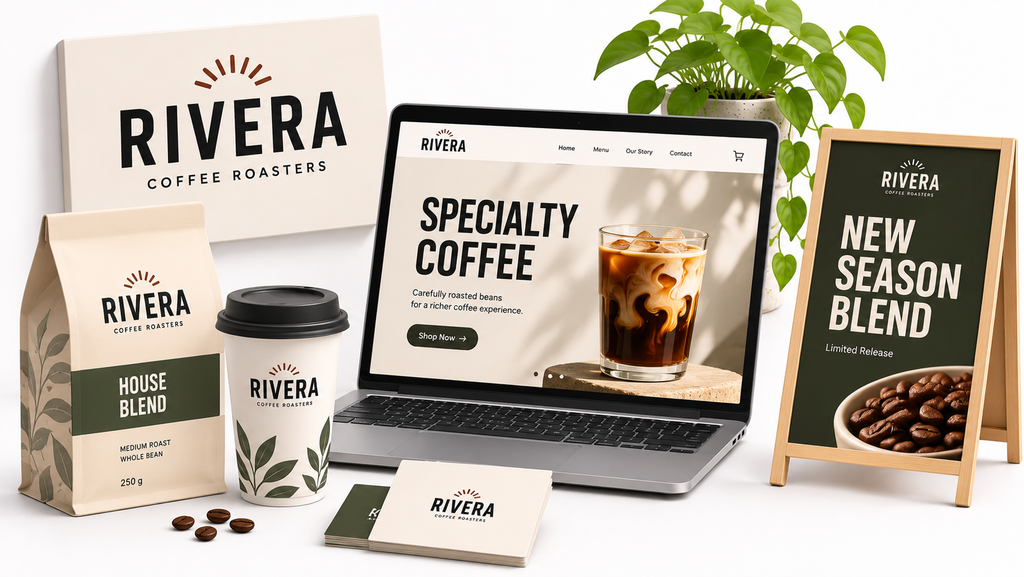
Commercial use refers to using a font in projects connected to a business, organization, product, service, or revenue-generating activity.
This does not necessarily mean that the font itself is being sold. A font can be used commercially even when it appears only as part of a larger design or business project.
Common examples of commercial font usage include:
- Creating logos and brand identities for businesses.
- Designing product packaging and labels.
- Producing advertisements and marketing materials.
- Creating promotional social media content for a company.
- Designing websites for businesses.
- Creating merchandise for sale.
- Designing brochures, catalogs, and business presentations.
- Producing graphics for clients as a freelance designer.
For example, if a designer uses a font to create a logo for a coffee shop, that project is generally considered commercial use.
Similarly, if an ecommerce business uses a font on its website, product packaging, or advertising campaigns, it may require a commercial license.
The specific permission required depends on the font’s licensing terms and the intended use.
Personal Use vs. Commercial Use: Key Differences
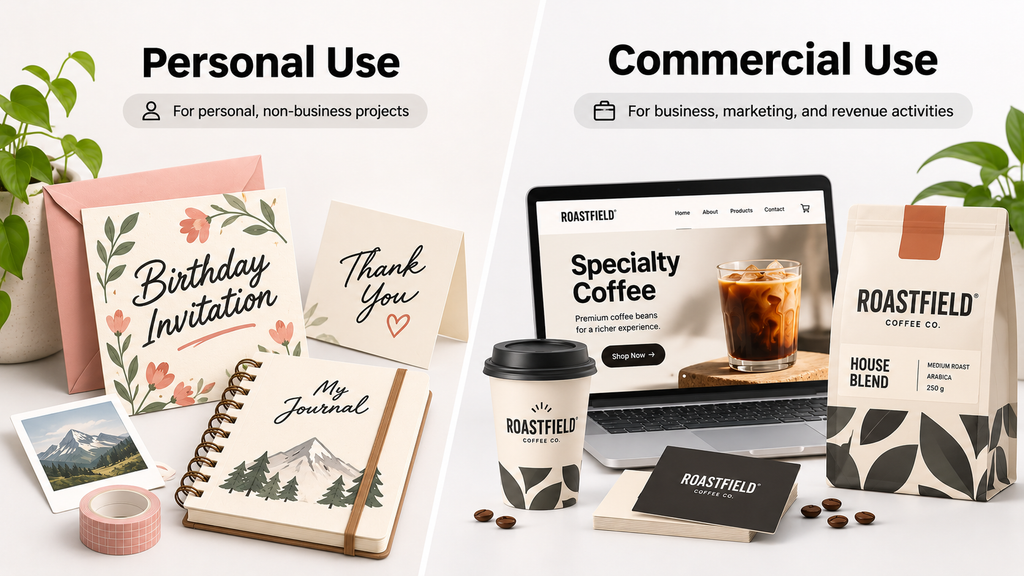
The most important difference between personal and commercial font usage is the purpose of the project.
Personal use generally supports individual activities, while commercial use supports business operations, marketing, products, and professional services.
Here is a simple comparison:
| Personal Use | Commercial Use |
|---|---|
| Personal invitations | Business advertisements |
| Personal artwork | Brand identity design |
| Hobby projects | Product packaging |
| Private social media posts | Business social media campaigns |
| Personal greeting cards | Marketing materials |
| Personal journals | Commercial publications |
| Non-commercial projects | Client design projects |
These examples are general guidelines, not universal legal definitions. A font’s actual EULA determines which activities are permitted.
Can You Use a Personal Use Font for Commercial Projects?
In most cases, a font labeled Personal Use Only cannot be used for commercial projects unless the font creator provides additional permission.
For example, imagine downloading a free font from a website and using it to design a business logo.
Even if the font was downloaded at no cost, the download itself does not grant commercial usage rights.
If the license specifically limits the font to personal use, you should obtain the appropriate commercial license before using it for the business project.
The same principle applies to other commercial activities, including:
- Client branding projects.
- Business websites.
- Paid advertisements.
- Product labels and packaging.
- Merchandise intended for sale.
If you are unsure whether your project qualifies as commercial use, contact the font creator or foundry and request clarification.
Does Free Mean Free for Commercial Use?
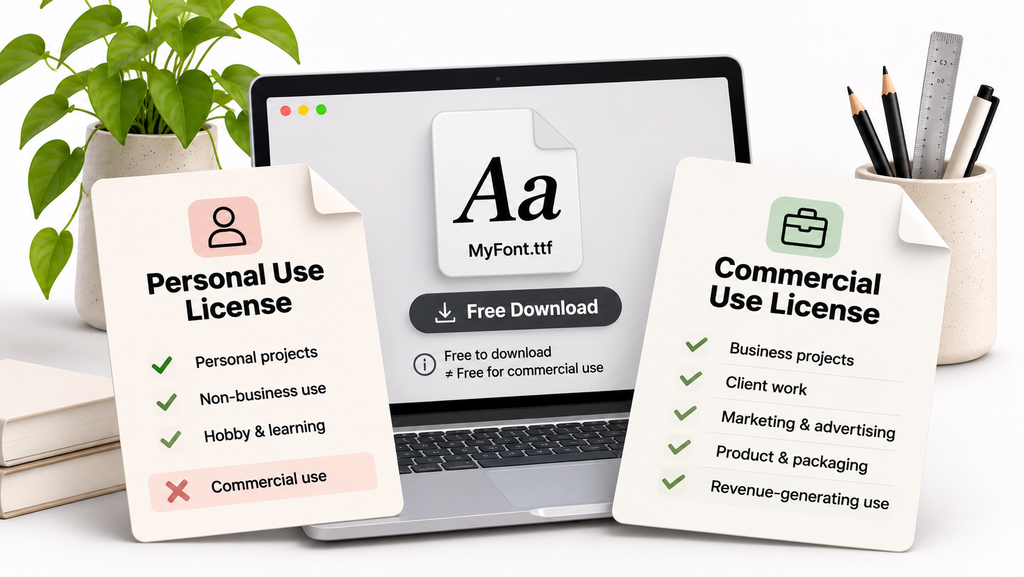
No. The word “free” does not always mean that a font can be used commercially.
Font creators and foundries may offer different licensing arrangements. Some fonts are free for personal use only, while others allow both personal and commercial usage.
Common font license descriptions include:
Free for Personal Use
The font can be downloaded and used for permitted personal projects. Commercial projects may require a paid license.
Free for Commercial Use
The font may be used commercially under the permissions and restrictions stated in its license. Some conditions may still apply.
Open-Source Font License
Some fonts are distributed under open-source licenses, such as the SIL Open Font License. These licenses provide specific permissions for using, modifying, and redistributing fonts, subject to their terms.
Before downloading or using any free font, check its license documentation. Do not rely only on the download page’s description.
When Do You Need a Commercial Font License?
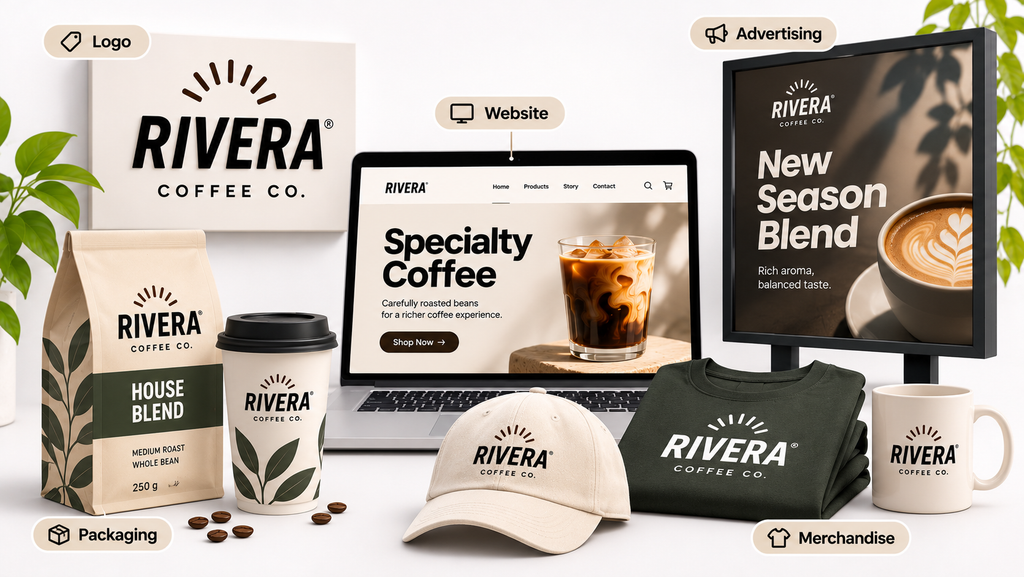
You generally need to consider a commercial font license whenever a font is used to support a business, paid service, commercial product, or professional client project.
Here are some common situations.
1. Logo and Brand Identity Design
A logo is one of the most important elements of a company’s visual identity.
If you use a font to create a logo for a business, you should verify that the license permits this type of commercial use.
This applies to logos for startups, established companies, personal brands, restaurants, fashion labels, and other businesses.
2. Website and Ecommerce Design
Fonts are commonly used in website headings, navigation menus, product descriptions, banners, and other interface elements.
If a business uses a font on its website, the appropriate webfont license may be required.
A desktop license does not automatically grant permission to embed a font on a website. The required license depends on how the font is implemented and the foundry’s terms.
3. Advertising and Marketing
Businesses use typography across digital advertisements, printed promotions, social media campaigns, brochures, and marketing materials.
If a font is part of a commercial advertising campaign, make sure the license covers the intended use.
4. Product Packaging and Merchandise
Fonts are frequently used on product labels, boxes, apparel, accessories, and other physical products.
If the products are manufactured or sold commercially, check whether the font license permits that type of use and whether additional permissions are necessary.
5. Client Projects
Freelance designers and creative agencies often use fonts when working for clients.
A designer should not assume that purchasing or downloading a font automatically grants unlimited usage rights to every client.
Check who is permitted to use the font, how many users or devices are covered, and whether the client needs to obtain a separate license.
What About Personal Projects That Become Commercial?
Sometimes a project starts as a personal activity and later becomes a business.
For example, you might create a personal illustration using a font and eventually decide to sell it as a poster or merchandise.
Another example is a personal social media account that grows into a monetized business.
When the purpose or distribution of a project changes, the original font license may no longer cover the new use.
In these situations, review the license again and contact the foundry if necessary. You may need to purchase an additional license before continuing the commercial activity.
It is better to confirm permission before launching a product or campaign than to discover a licensing issue afterward.
How to Check Whether a Font Allows Commercial Use
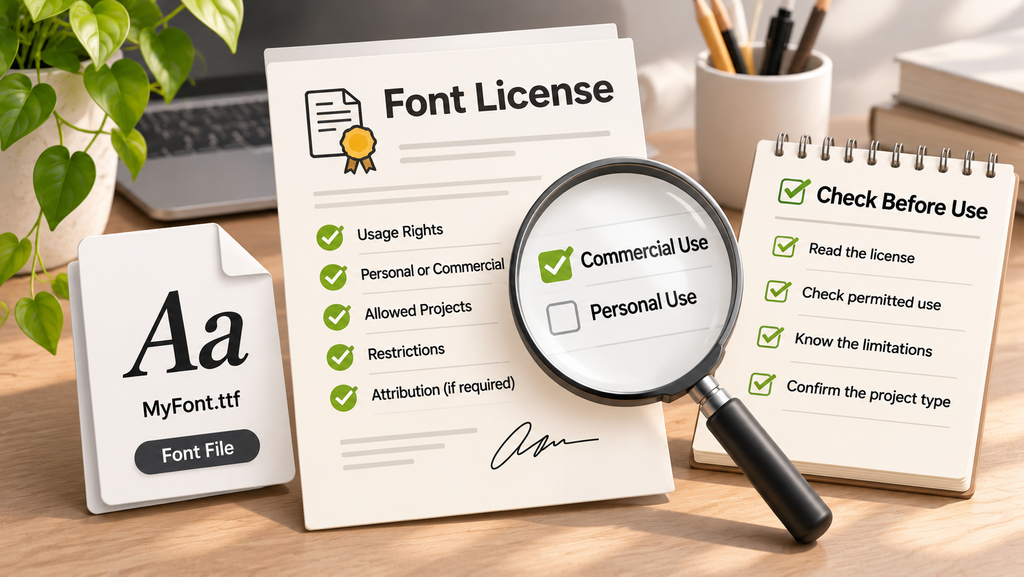
Before using a font in any project, follow these steps.
1. Read the Font License Agreement
Look for the font’s EULA (End User License Agreement) or other licensing documentation.
Pay attention to the permitted uses, restrictions, number of users, and distribution conditions.
2. Check the Download Source
If you download a font from a marketplace or font website, review the licensing information provided on the product page.
Do not assume that every font on the same website has identical permissions.
3. Identify Your Intended Use
Determine how you plan to use the font.
Will it appear in a personal invitation, business logo, website, mobile application, product packaging, or advertising campaign?
Different applications may require different license types.
4. Contact the Font Foundry
If the license is unclear, contact the font designer or foundry directly.
Explain your intended use and ask which license covers your project.
5. Keep Your License Records
Save your purchase confirmation, invoice, license agreement, and other relevant documentation.
These records can help you demonstrate that you obtained permission to use the font.
Common Mistakes When Using Fonts
Understanding font licensing can help prevent several common mistakes.
Assuming every free font allows commercial use.
A free download does not necessarily include commercial rights. Always check the license.
Using a personal-use font for client work.
A project created for a paying client is generally commercial in nature. Make sure the license covers the intended use.
Confusing font installation with usage permission.
Installing a font on your computer does not automatically grant permission for every possible application.
Assuming one license covers every platform.
Desktop, web, app, server, and other licensing arrangements may have different terms. Check which permissions are included.
Ignoring the license after a project grows.
A project that begins as personal work may later become commercial. Review the license whenever the intended use changes.
Frequently Asked Questions
Is personal use the same as non-commercial use?
They are often used similarly, but their exact meaning depends on the license agreement. Always follow the definitions provided by the font creator.
Can I use a free font for my business logo?
Only if the font’s license permits commercial use and allows the specific logo application. A font labeled Personal Use Only does not automatically grant this permission.
Can I use a personal-use font for a YouTube channel?
It depends on the font license and how the font is used. If the channel is monetized, promotes a business, or supports commercial activity, you should check whether the license permits that use.
Can I use a personal-use font for freelance client projects?
Generally, client work is considered commercial use because it supports a professional service or business transaction. Check the font’s EULA and obtain the appropriate permission.
If I buy a font, can I use it for any commercial project?
Not necessarily. Purchasing a font grants only the permissions included in the purchased license. Some licenses cover desktop use, while others may be required for websites, applications, servers, or broader business usage.
Do I need a separate license for every project?
Not always. Some licenses cover multiple projects or ongoing use within defined limits. Others may have restrictions based on users, devices, impressions, or applications. Review the specific EULA to understand what is covered.
Final Thoughts
Understanding the difference between personal and commercial font usage is essential for designers, freelancers, businesses, and brands.
A font that is free for personal projects may not be suitable for commercial applications. Before using a font, take time to review its license, understand the permitted uses, and make sure your project is covered.
If you are working on a business identity, website, advertising campaign, product packaging, or client project, choosing the correct commercial font license is an important part of professional design practice.
At Outfonts, we believe great typography should be supported by clear licensing. Explore our professional typefaces and choose the license that matches your project.
Explore professional fonts at Outfonts: https://outfonts.com/
This article provides general educational information about font licensing, not legal advice. Licensing permissions and restrictions vary by font creator and EULA. Always review the applicable license before using a font.