
Fonts are an essential part of visual communication. They help businesses establish brand identities, make designs more recognizable, and communicate messages through typography. From company logos and product packaging to websites, advertisements, and mobile applications, fonts are used in almost every area of modern design.
However, downloading a font does not automatically mean you have permission to use it for every purpose. Like other creative works, fonts are protected by intellectual property rights, and their use is often governed by specific licensing terms.
This is where font licensing becomes important.
A font license explains how a font can be used, who is allowed to use it, and what restrictions apply. Understanding these terms helps designers, businesses, and creative agencies avoid licensing problems while ensuring that fonts are used appropriately.
Whether you are an independent designer, a startup founder, or part of a large company, understanding font licenses is an important step toward responsible and professional design work.
In this guide, we will explain what a font license is, explore the different types of font licenses, compare personal and commercial usage, and help you understand how to choose the right license for your projects.
What Is a Font License?
Definition of a Font License
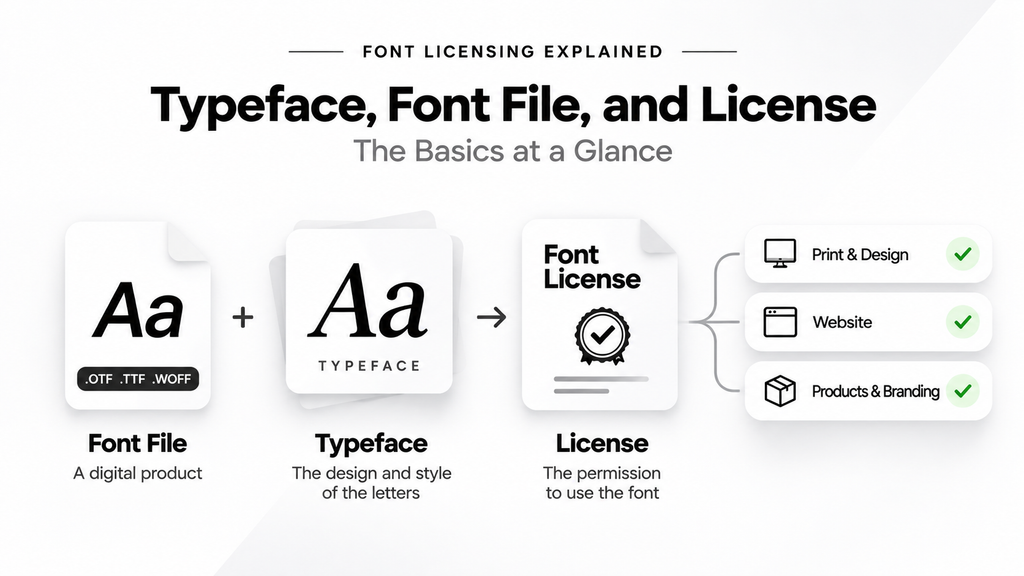
A font license is a legal agreement that defines the terms and conditions under which a font software or typeface may be used.
When you purchase or download a font, you are generally not purchasing ownership of the font itself. Instead, you are obtaining permission to use it according to the conditions established by the font creator or foundry.
These conditions may specify how many people can use the font, which devices it can be installed on, whether it can be used for commercial projects, and whether it can be embedded in websites or applications.
For example, a font may be licensed for use in printed materials but require a separate license for website embedding. Another font may allow personal projects but require a commercial license for business-related activities.
The exact permissions depend on the font’s individual license agreement.
A font license is commonly provided through a document called an End User License Agreement (EULA). The EULA describes the rights granted to the customer and the restrictions that apply to the font.
Why Do Fonts Require a License?
Creating a professional font requires considerable time, knowledge, and technical work.
Type designers develop letterforms, refine spacing, adjust proportions, create character sets, and test how the font performs across different applications and operating systems.
A finished font may contain hundreds or even thousands of individual characters, along with carefully developed spacing, kerning, stylistic alternatives, and technical features.
Font licensing allows designers and foundries to distribute their work while defining how customers can use it.
It also helps ensure that font creators receive compensation for the commercial use of their intellectual property.
Without licensing agreements, it would be difficult for independent type designers and foundries to establish clear usage conditions or manage how their products are distributed.
How Font Licensing Works
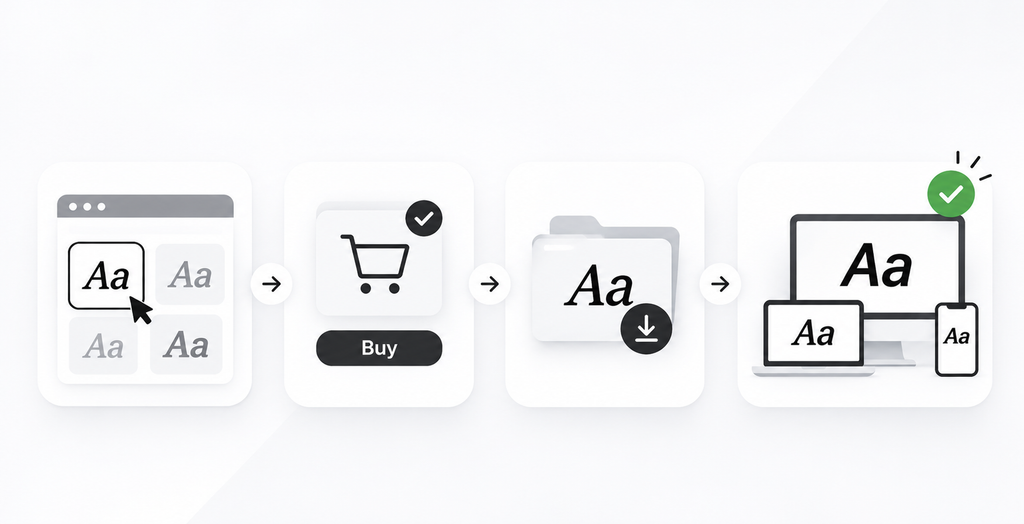
The process is generally straightforward:
- A designer or foundry creates and publishes a font.
- The customer selects a font and reviews its available licensing options.
- The customer purchases or downloads the font under the selected terms.
- The customer receives permission to use the font within the scope of that license.
- If the project requires additional usage rights, the customer may need to purchase an additional or different license.
For example, a freelance designer may purchase a desktop license to create a client’s logo and printed marketing materials. If the same font needs to be embedded into the client’s website, a webfont license may also be required.
The important principle is that permission for one type of usage does not automatically grant permission for every other type of usage.
Why Is Font Licensing Important?
Font licensing is important because it establishes clear boundaries between permitted and restricted uses. It protects the interests of font creators while helping customers understand what they are allowed to do with the fonts they use.
Protecting the Rights of Font Designers
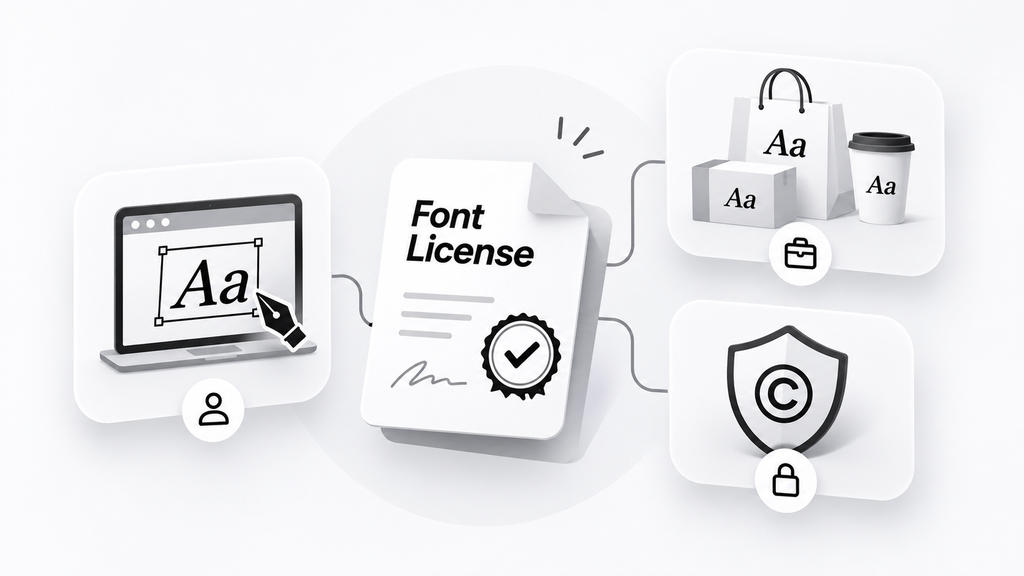
Fonts are creative products developed by type designers and foundries.
A professional typeface can take months or years to develop. Designers invest time in research, drawing, testing, technical development, and quality control.
Font licensing provides a framework for distributing that work commercially.
When customers purchase the appropriate license, they support the people and businesses responsible for creating and maintaining the fonts.
Licensing also helps prevent unauthorized redistribution, sharing, or commercial exploitation of font files.
Using Fonts Legally in Design Projects
Different design projects may require different permissions.
A font used in a personal invitation may have different licensing requirements from one used in a national advertising campaign.
For example:
- A personal greeting card may fall under personal-use terms.
- A company logo may require commercial-use permission.
- A website may require a webfont license.
- A mobile application may require an app or software license.
- A company-wide design system may require a broader business or enterprise agreement.
Understanding the license before starting a project helps avoid situations where the actual usage exceeds the permissions originally granted.
Avoiding Licensing Issues for Businesses
Businesses often use fonts across multiple platforms and departments.
A company may use the same typeface in its logo, packaging, website, social media campaigns, advertisements, presentations, and internal software.
If the original license only covers a limited type of usage, expanding the font’s use without obtaining the necessary permissions may create licensing issues.
For agencies and companies working with multiple clients, it is especially important to understand who owns the license, who can install the font, and which projects are covered.
A clear licensing process helps businesses manage their creative assets more responsibly.
Different Types of Font Licenses
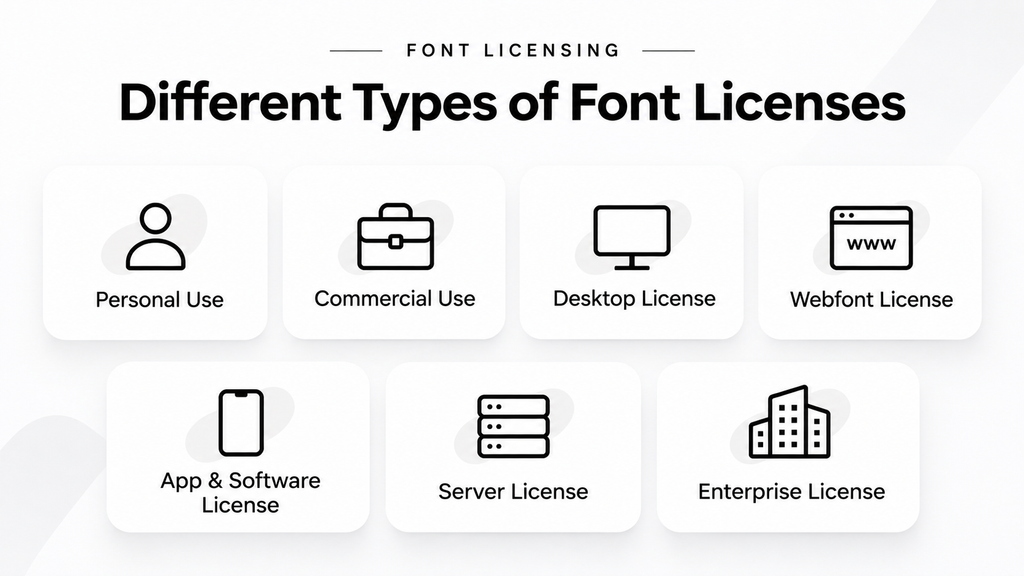
Font licenses are commonly divided according to how a font will be used. Although many foundries offer similar categories, the exact permissions, limitations, and terminology can vary.
Understanding the difference between personal and commercial font usage is essential before choosing a license. If you want to explore this topic in more detail, read our guide to Personal Use vs. Commercial Use.
Always review the individual EULA License before purchasing or using a font.
1. Personal Use License
A personal-use license generally allows someone to use a font for non-commercial activities.
Examples may include:
- Personal invitations
- Birthday cards
- Personal artwork
- School assignments
- Hobby projects
- Non-commercial social media graphics
A personal-use license usually does not grant permission to use the font for activities that generate business revenue or promote commercial products and services.
However, the definition of personal use can differ between foundries.
For example, a design created for a personal hobby may qualify as personal use, while a design created to promote a small business may require commercial permission.
If you intend to use a font for a client, company, or income-generating project, check the licensing terms before proceeding.
2. Commercial Use License
A commercial font license grants permission to use a font for business-related activities, subject to the specific conditions of the agreement.
Commercial applications may include:
- Business branding
- Marketing materials
- Product packaging
- Advertising campaigns
- Promotional graphics
- Commercial merchandise
- Client design projects
Commercial licensing is particularly important for businesses, freelancers, agencies, and brands that use typography to promote products or services.
However, commercial permission does not necessarily cover every possible application.
For instance, a commercial desktop license may allow a designer to create printed advertisements but may not include permission to embed the font in a website or mobile application.
The customer should identify the intended usage and select the license that covers it.
3. Desktop License
A desktop license typically allows customers to install a font on authorized computers and use it in compatible design applications.
It is commonly used for creating:
- Logos
- Posters
- Brochures
- Business cards
- Packaging designs
- Presentations
- Social media graphics
- Printed advertisements
Desktop licensing is one of the most common licensing categories for graphic designers and creative professionals.
However, desktop licenses may include restrictions concerning the number of users, computers, or installations.
Some agreements also define whether fonts can be used to create commercial products or whether additional permissions are necessary for certain types of merchandise.
A desktop license should not automatically be interpreted as permission to embed the font in a website, application, or software product.
4. Webfont License
A webfont license allows a font to be used on websites through font embedding technology.
Instead of installing the font only on a designer’s computer, the font files are hosted on a server and delivered to visitors’ browsers when they access the website.
Webfont licenses may define:
- The number of websites or domains covered
- Monthly website traffic limits
- Pageview restrictions
- Authorized domains
- Hosting requirements
- Font file formats
- Whether self-hosting is permitted
For example, a company may purchase a webfont license to use its brand typeface on its official website.
If the company also operates separate websites or microsites, it should check whether those domains are covered by the original agreement.
Webfont licensing is particularly relevant for businesses that want consistent typography across their digital platforms.
5. App and Software License
An app or software license covers the use of a font within a mobile application, desktop application, or other software product, according to the agreement.
For example, a company developing a mobile shopping application may want to use a custom typeface throughout its user interface.
In this situation, a standard desktop license may not be sufficient.
App and software licenses may specify:
- The number of applications covered
- The number of users or downloads
- Whether the font can be embedded in application files
- Whether the font can be used in software distributed to customers
- Whether additional platforms require separate permission
These terms are important because embedding font files in software is different from simply using a font to create static design assets.
6. Server License
A server license generally covers the use of a font on a server to generate dynamic content or provide typography-related services.
This may include applications such as:
- Automated document generation
- Online design platforms
- Personalized product generators
- Dynamic image creation
- Web-based publishing systems
For example, an online platform may allow customers to enter their own text and generate personalized graphics using a selected typeface.
Because the font is being used within a server-side process, a regular desktop or webfont license may not provide sufficient permission.
The exact definition of server usage varies between foundries, so businesses should describe their technical implementation when requesting a license.
7. Enterprise License
An enterprise license is generally designed for larger organizations that need broader font usage across multiple teams, departments, locations, or platforms.
Depending on the agreement, it may cover several types of usage under one licensing arrangement.
Enterprise licensing can be useful for:
- Large corporations
- International brands
- Retail businesses
- Advertising networks
- Multi-location companies
- Organizations with centralized design teams
An enterprise agreement may include permissions for multiple users, wider distribution, or different types of commercial applications.
However, enterprise licensing is not a universal standard. Each foundry may define its own pricing structure, usage limits, and permissions.
Businesses should discuss their requirements directly with the font foundry to ensure the agreement covers their actual needs.
Personal Use vs. Commercial Use
One of the most common questions about font licensing is the difference between personal and commercial use.
Although the distinction may appear simple, it is important to understand how the font will be used rather than focusing only on the type of project.
What Counts as Personal Use?
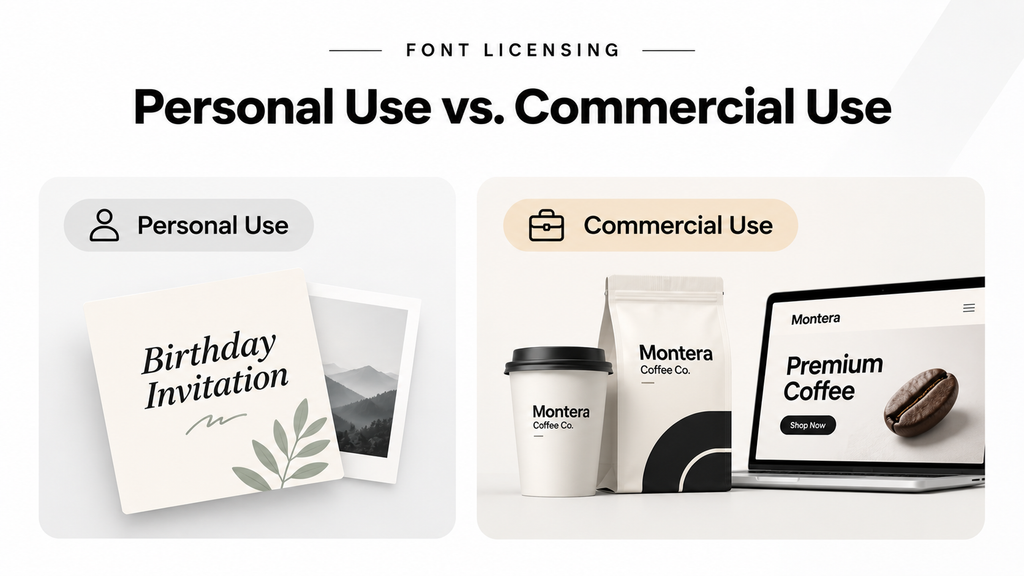
Personal use generally refers to projects created for private, non-commercial purposes.
Examples include:
- Designing a personal birthday invitation.
- Creating artwork for your home.
- Making a greeting card for a family member.
- Preparing a non-commercial school project.
- Creating personal wallpapers or hobby graphics.
The main characteristic is that the project is not being used to promote a business, sell products, provide paid services, or generate commercial value.
However, always check the individual license because some foundries define personal use differently.
What Counts as Commercial Use?
Commercial use generally refers to using a font in connection with a business, organization, product, service, or revenue-generating activity.
Examples include:
- Designing a logo for a company.
- Creating product packaging for a retail brand.
- Producing advertisements for a business.
- Designing marketing materials for a client.
- Creating graphics to promote an online store.
- Developing brand identity assets for a startup.
A project does not necessarily need to generate direct revenue to be considered commercial. For example, promotional materials created to build awareness for a business may still fall under commercial usage.
Examples of Personal and Commercial Projects
Consider two people using the same font to create a poster.
The first person creates a poster for a personal art project and displays it in their home.
The second person creates a poster to advertise a restaurant’s grand opening.
Although the visual design process may be similar, the purpose and context of the projects are different.
The first project may qualify as personal use, while the second would generally require commercial-use permission.
This is why designers should identify the intended purpose of a project before selecting a font license.
For a more detailed comparison, read our guide to Personal Use vs. Commercial Use: Understanding Font Licenses.
Can You Use Free Fonts for Commercial Projects?
Free fonts are widely available on the internet. Many websites allow users to download typefaces without paying an upfront fee.
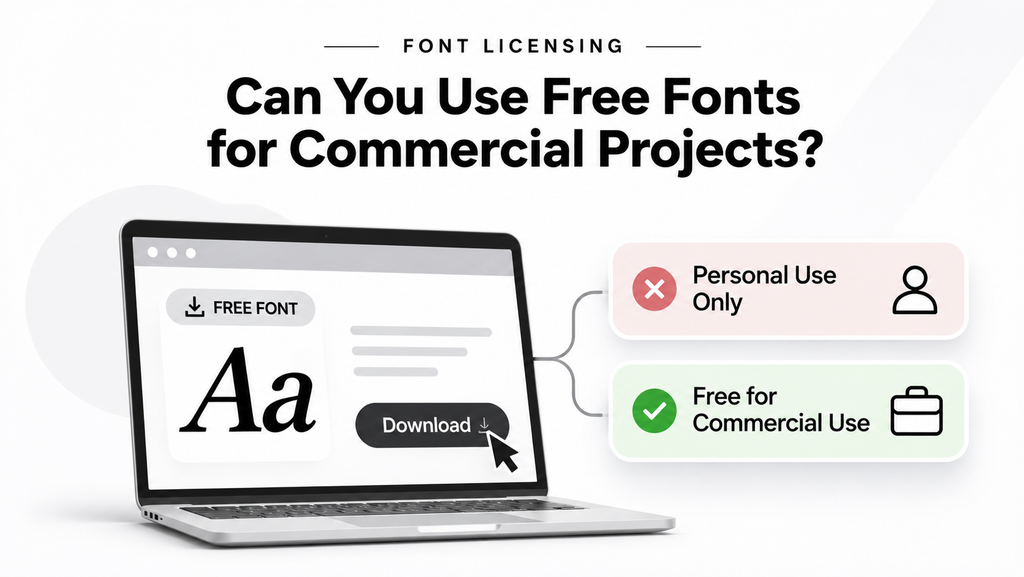
However, a free download does not automatically mean that a font is free for commercial use.
The most important thing to check is the license attached to the font.
Understanding Free Font Licenses
Free fonts may be distributed under different licensing arrangements.
Some are available for personal use only, while others allow commercial projects without requiring payment.
There are also fonts distributed under open-source licenses that provide broader permissions, subject to their specific terms.
For example, some fonts are distributed under the SIL Open Font License (OFL), which generally permits broad use, modification, and redistribution under defined conditions.
However, not every free font uses the same license.
The fact that a font is available on a free font website does not establish its commercial-use permissions.
Personal Use Only vs. Free for Commercial Use
These two terms have different meanings.
Free for personal use generally means that the font can be downloaded and used for non-commercial activities without payment.
Commercial projects may require purchasing a license or obtaining permission from the creator.
Free for commercial use means that the font’s license permits certain business-related uses without requiring a separate commercial license fee.
Even then, the license may include restrictions regarding redistribution, modification, embedding, or other applications.
Always read the actual licensing document rather than relying only on a download page description.
How to Check a Free Font License
Before using a free font commercially:
- Find the original source of the font.
- Look for its license document or EULA.
- Identify whether commercial use is permitted.
- Check restrictions related to modification, redistribution, and embedding.
- Keep a copy of the license information for future reference.
If the license is missing or unclear, contact the font creator or distributor before using the font in a commercial project.
For a deeper explanation, read our article Can You Use Free Fonts for Commercial Projects?
What Happens If You Use a Font Without a License?
Using a font without the required permission can create legal and business risks.
The actual consequences depend on the font’s legal protection, the applicable law, the specific license terms, and the circumstances of the use.
Copyright and Licensing Risks
Font licensing disputes can arise when a person or business uses a font outside the permissions granted by the creator.
Examples may include:
- Using a personal-use font in commercial advertising.
- Embedding a desktop-only font on a public website.
- Distributing font files to unauthorized users.
- Installing a font on more computers than the license allows.
- Using a font in software without the required permission.
The specific legal position can vary between jurisdictions and may depend on whether the dispute concerns the font software, the typeface design, contractual licensing terms, or other protected rights.
For this reason, it is important not to assume that every font is governed by identical legal rules.
Potential Consequences for Businesses
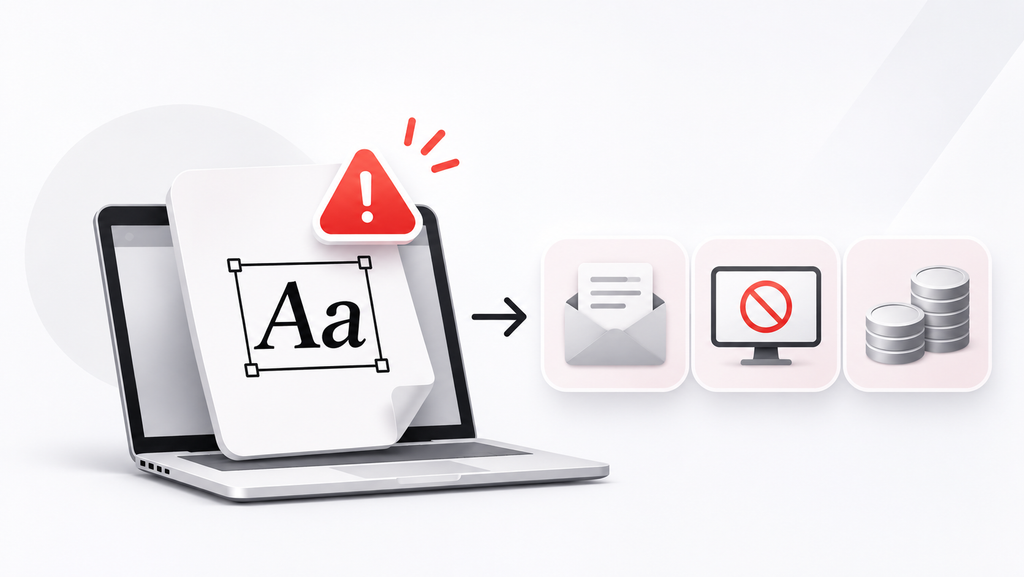
Depending on the circumstances, unauthorized font usage may result in:
- A request to purchase the appropriate license.
- A request to stop unauthorized usage.
- A licensing settlement discussion.
- Additional legal or contractual disputes.
- Costs associated with replacing or updating brand assets.
For businesses, the consequences can extend beyond the licensing fee itself.
A company may need to update its packaging, marketing materials, website, or other assets if it cannot obtain the necessary permissions.
This can create additional design, production, and operational costs.
How to Resolve Font Licensing Issues
If you discover that your business is using a font without the required license, take the issue seriously.
Start by identifying where and how the font is being used.
Review the original license, determine whether the current usage is permitted, and contact the font creator or foundry if clarification is necessary.
In some cases, purchasing the appropriate license may resolve the issue. In others, the business may need to discontinue the unauthorized usage or replace the font.
For a more detailed discussion, read What Happens When You Use a Font Without a License?
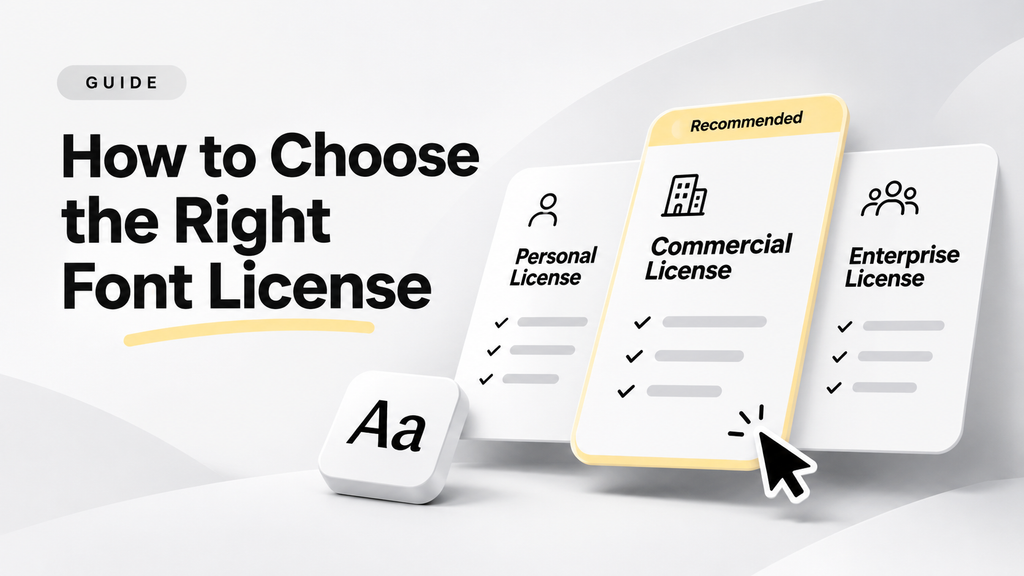
How to Choose the Right Font License
Choosing the right font license starts with understanding how the font will be used.
Rather than purchasing the most expensive license automatically, identify the actual requirements of your project and compare them with the permissions offered by the foundry.
1. Identify How You Will Use the Font
Start by listing the applications where the font will appear.
For example:
- Printed materials
- Company logos
- Product packaging
- Website content
- Digital advertisements
- Mobile applications
- Software products
- Dynamic content generation
A project involving only printed materials may require different permissions from one that includes website embedding or software distribution.
2. Consider Your Business Size and Audience
Some licenses are structured around the number of authorized users, installations, or other usage metrics.
A freelance designer working independently may have different requirements from an agency with a large creative team.
Similarly, a startup may need a smaller licensing arrangement than an international corporation with multiple offices.
Consider how many people need access to the font and whether its usage will expand in the future.
3. Check the Number of Users and Devices
Many desktop licenses define how many people or computers may use the font.
For example, a license may allow installation on a specified number of computers or use by a defined number of employees.
If multiple designers need access, check whether each person requires an individual license or whether the foundry offers a team-based arrangement.
Do not assume that purchasing one license automatically permits unlimited sharing across an organization.
4. Review the Font’s License Agreement
Before purchasing, read the EULA carefully.
Pay particular attention to:
- Permitted usage categories
- Number of authorized users
- Installation limits
- Commercial-use permissions
- Embedding restrictions
- Redistribution restrictions
- Modification rights
- Renewal or upgrade requirements
If anything is unclear, contact the foundry and explain your intended use.
A short licensing discussion before starting a project can prevent unnecessary complications later.
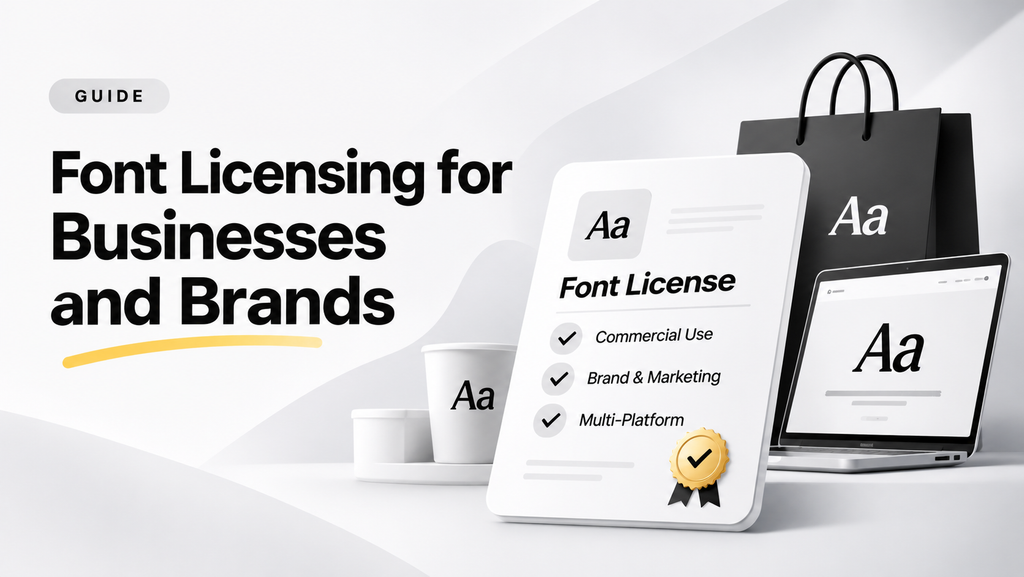
Font Licensing for Businesses and Brands
Businesses rely on typography to create consistent and recognizable brand identities.
However, as organizations grow, their font usage may become more complex.
A company may start with a single logo and eventually use the same typeface across its website, packaging, advertisements, presentations, software, and international marketing campaigns.
This makes proper font licensing an important part of brand asset management.
Font Licensing for Startups
Startups often begin with a small team and limited design resources.
They may use fonts for their logo, website, social media content, pitch decks, and marketing materials.
At this stage, it is important to identify the intended commercial usage and select a license that covers the required applications.
Startups should also consider future growth.
A font that works for a small brand identity project may later become part of a larger digital product or marketing system.
Understanding the available licensing options early can make future expansion easier.
Font Licensing for Agencies
Creative agencies frequently work with multiple clients across different industries.
They may use fonts to create logos, brand identities, packaging, advertisements, and digital experiences.
One important consideration is determining who is responsible for the font license.
Depending on the agreement, the agency may need its own license for its design work, while the client may need a separate license for continued use of the font within its business.
Agencies should not assume that transferring a finished design automatically transfers the right to use the underlying font software.
The licensing agreement should clearly explain the permitted client usage and any requirements for additional licenses.
Font Licensing for Enterprise Brands
Large organizations often require more comprehensive licensing arrangements.
Their typography may appear across:
- Multiple company divisions
- International websites
- Retail packaging
- Advertising campaigns
- Internal presentations
- Mobile applications
- Digital products
- Partner and franchise materials
An enterprise license may provide a suitable arrangement for these broader requirements.
However, the scope should be discussed with the font foundry.
A company should explain its number of users, platforms, locations, and intended applications to ensure the agreement reflects its actual usage.
For larger organizations, direct communication with the foundry can also help establish a clearer licensing structure for future projects.
For more information, see Font Licensing for Businesses, Agencies, and Brands.
Common Font Licensing Mistakes
Even experienced designers and businesses can misunderstand font licensing.
Here are several common mistakes to avoid.
1. Assuming Every Free Font Is Free for Commercial Use
A font may be free to download but restricted to personal projects.
Always check the license before using it in business-related work.
2. Sharing Font Files Without Permission
Purchasing a font does not automatically grant permission to distribute its files to other people.
Sharing font files with colleagues, clients, or external contractors may be restricted by the EULA.
Check whether your agreement allows team installations or file sharing.
3. Using a Desktop License for Website Embedding
A desktop license typically covers font installation and use in design applications.
It may not include permission to host the font files on a website.
If you want to use a font directly on a website, check whether a webfont license is required.
4. Ignoring License Restrictions
Some licenses include limits based on users, computers, websites, traffic, or applications.
Ignoring these restrictions can result in usage beyond the original agreement.
Review the terms before expanding how a font is used.
5. Assuming One License Covers Every Project
A license purchased for one type of application may not cover other uses.
For example, permission to create a logo does not necessarily include permission to embed the font in a mobile application.
Always evaluate the intended use rather than assuming all commercial activities are covered by one license.
Frequently Asked Questions About Font Licensing
Do I Need a License to Use a Font?
In most cases, you need permission from the font creator or rights holder to use a font under its licensing terms.
The type of permission required depends on the font and how you intend to use it.
Some fonts are available under licenses that allow broad usage without payment, while others require purchasing a specific license.
Can I Use a Font Commercially After Downloading It for Free?
Not necessarily.
Some free fonts allow commercial use, while others are restricted to personal projects.
Check the font’s EULA or original licensing document before using it in a business, advertisement, product, or client project.
Can I Use One Font License for Multiple Clients?
This depends on the terms of the license.
Some licenses may allow specific client work, while others may restrict usage to the original license holder or a defined organization.
If you are a freelance designer or agency, check whether the agreement covers work for multiple clients and whether clients need their own licenses for continued use.
Can I Use Licensed Fonts in Logos?
Many commercial font licenses allow fonts to be used to create logos and other static graphic designs.
However, the exact permissions depend on the EULA.
Also check whether the license allows the font to be converted into outlines and whether there are restrictions on redistributing editable font files.
Can I Share Font Files With My Team?
You should not assume that a font license allows unlimited sharing.
Some agreements define the maximum number of users or installations. Others provide separate team or enterprise licensing options.
Review the license to determine how many employees or contractors may use the font.
How Do I Know If a Font Is Licensed for Commercial Use?
The most reliable way is to review the original license agreement supplied by the font creator or foundry.
Look for explicit language concerning commercial projects, business use, advertising, and other intended applications.
If the license is unclear, contact the rights holder before using the font commercially.
Final Thoughts
Font licensing is an important part of professional design and brand management.
Whether you are creating a personal project, developing a startup identity, designing product packaging, or managing typography for a large organization, understanding font permissions helps ensure that your work is used appropriately.
The most important thing is to choose a license based on how the font will actually be used.
A font that is suitable for printed design may require additional permission for website embedding, software distribution, or other applications. Likewise, a free download does not automatically grant commercial-use rights.
Before using any font, take the time to review its license agreement and confirm that it covers your intended project.
At Outfonts, we create professional typefaces for designers, creative studios, and brands. Explore our font collection and discover licensing options designed to support different creative and commercial needs.
Find the right typeface for your next project at Outfonts.